
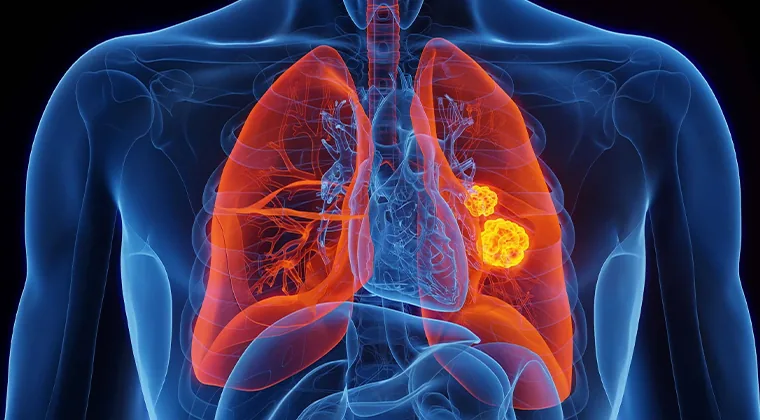
Lung cancer

Reviewed by: Dr. Jesús Ramón Sosa Chombo · Pulmonology · Pulmonary Oncology · Specialty license 14129039
Last reviewed:
Description
Lung cancer is a disease in which abnormal cells grow out of control in one or both lungs. This uncontrolled growth can form tumors that interfere with lung function and, if not detected and treated in time, can spread (metastasize) to other parts of the body. It is the leading cause of cancer death worldwide. Although smoking is the most important risk factor, it can also affect people who do not smoke, due to exposure to radon, asbestos, or environmental pollution.
Causes
- Smoking (active and passive), the main cause
- Radon exposure
- Asbestos
- Air pollution
- Family history
- Exposure to industrial chemicals
- Prior radiation therapy to the chest
Symptoms
- Persistent cough that gets worse
- Chest pain
- Shortness of breath
- Wheezing
- Unexplained weight loss
- Fatigue
- Coughing up blood
- Hoarseness
Diagnosis
It starts with a chest CT scan. To confirm it, a biopsy is needed (by bronchoscopy, image-guided needle biopsy, or surgery), which also identifies the type of cancer and its molecular markers, which guide treatment. Studies such as a PET scan are used to determine the stage.
Treatment
It depends on the type and the stage. In early stages, surgery, often minimally invasive, can have a curative intent. Radiation therapy, chemotherapy, immunotherapy, and targeted therapies aimed at genetic changes in the tumor are also used. Ideally, the decision is made by a team of several specialists.
Reference guideline: NCCN Guidelines, non-small cell lung cancer (current version); ESMO.
Complications
- Spread to other organs (metastasis)
- Pleural effusions (fluid around the lung)
- Airway obstruction
- Respiratory failure
- Chronic pain
- Superior vena cava syndrome
- Neurological complications
Risk factors
- Smoking
- Exposure to secondhand smoke
- Exposure to toxic substances (asbestos, radon)
- Family history of lung cancer
- Older age
- Previous lung disease
- Occupational exposure to carcinogens
Statistics in Mexico
In 2024, an estimated 7,507 new cases of lung cancer and 7,050 deaths from this cause occurred in Mexico. It is the sixth leading cause of cancer death in the country.
Frequently asked questions
Who should be screened?
People 50 to 80 years old who have smoked at least 20 pack-years and who still smoke or quit less than 15 years ago.
Is a lung nodule cancer?
Most are not. Depending on its size and appearance, it is monitored with CT scans or studied further.
Can it be operated on?
In early stages, surgery can have a curative intent. It depends on the type of cancer, its stage, and each person's health.
When should I see a pulmonologist?
If you have a cough that changes or does not go away, blood in your phlegm, unexplained weight loss, or a nodule was found on a CT scan.
Sources: USPSTF (2021) · Fleischner (2017) · NCCN · GLOBOCAN 2024
Conditions
Learn about other diseases
Early detection can make a difference in your prognosis. If you have symptoms or risk factors, book your consultation at AirCare Salud Respiratoria for a timely diagnosis.
Book online on Doctoralia19 conditions