Minimally invasive thoracic surgery

Reviewed by: Dr. Raúl David Vega Vivar · Thoracic Surgery · Specialty license 14842215
Last reviewed:
Advanced lung and chest surgery through small incisions, with a fast recovery.
Description
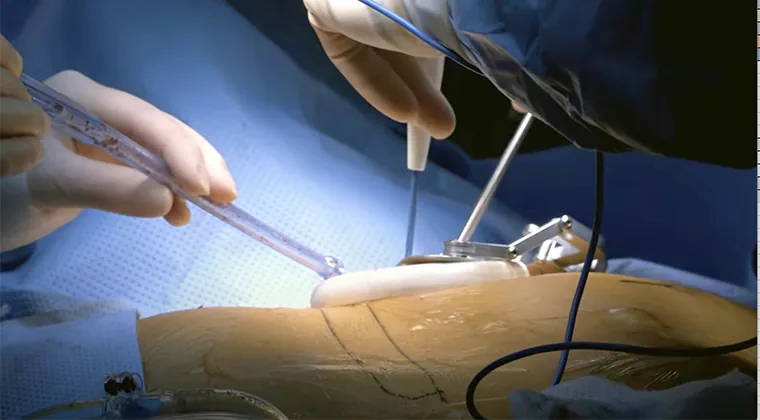
Minimally invasive thoracic surgery, known as VATS (video-assisted thoracoscopic surgery), is an advanced surgical technique that allows procedures in the chest and lungs through small incisions, using a video camera (thoracoscope) and specialized instruments. Unlike traditional open surgery (thoracotomy), which requires a large incision and spreading of the ribs, VATS minimizes surgical trauma.
Benefits
- Less pain after surgery
- Lower risk of infections and complications
- Shorter hospital stays
- Smaller, more cosmetic scars
- Faster recovery
- Early return to daily activities
Is it painful?
Pain is significantly less than with open surgery, but it is managed with pain medication during recovery.
What is it for?
To diagnose and treat a variety of lung and chest conditions, including removal of lung nodules, biopsies, drainage of pleural effusions, lobectomy for early-stage lung cancer, pneumothorax, and management of certain tumors.
Myths
- Minimally invasive surgery is not effective for complex cases. False: in experienced hands, it is a safe and effective option for many chest conditions
Process
- Complete preoperative evaluation
- General anesthesia
- Small incisions (2 to 4 ports)
- Insertion of the thoracoscope and instruments
- Performance of the procedure under direct visualization
- Closure of the incisions and placement of drains if necessary
Types
- Diagnostic VATS: for biopsies and evaluation
- Therapeutic VATS: for resections and definitive treatments
Does it require a hospital stay?
Inpatient (requires monitoring and postoperative care)
How long does it take?
2 to 6 hours, depending on the complexity of the case
Does it require anesthesia?
General
How long is the recovery?
1 to 3 weeks for light activities, 4 to 6 weeks for more strenuous activities
What care do I need afterward?
- Strict medical follow-up
- Proper pain management
- Respiratory physical therapy
- Avoid strenuous physical activity at first
- Follow the instructions for wound care
- Attend all your follow-up appointments
Frequently asked questions
What is a lobectomy?
It is a surgery that removes one of the lobes of the lung. It is indicated mainly for early-stage lung cancer, when the evaluation shows that the patient can undergo surgery. At AirCare it is performed minimally invasively when the case allows.
Who performs the surgery?
Dr. Raúl David Vega Vivar, a thoracic surgeon certified by the Consejo Nacional de Cirugía del Tórax.
Do I need any preparation?
Preoperative evaluation, laboratory and imaging studies, and fasting for 8 hours. If you smoke, it is advisable to quit as soon as possible. Your doctor will tell you which medicines to stop.
When will I have my results?
If tissue was taken, the pathology report takes 5 to 10 days.
Sources: ACCP (2013) · BTS (2023)
Our services
Explore our other services
If you need a chest procedure, consult Dr. Raúl David Vega Vivar at AirCare Salud Respiratoria to evaluate whether minimally invasive surgery is an appropriate option for you.
Book online on Doctoralia14 services available