
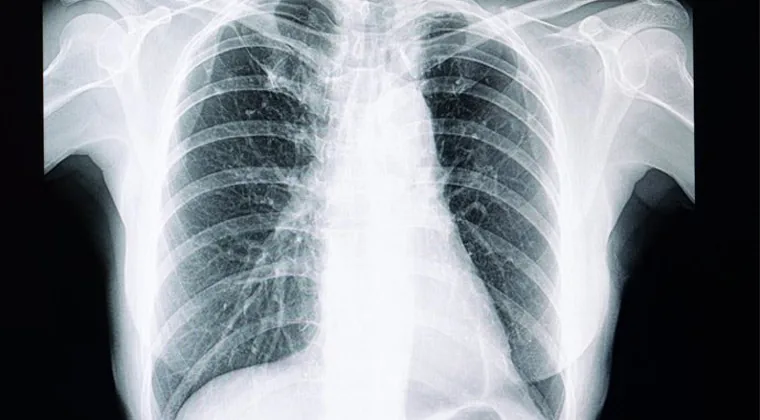
Pulmonary fibrosis

Reviewed by: Dr. Juan Carlos Acosta Salazar · Pulmonology · Respiratory Physiology and Therapy · Specialty license 14126695
Last reviewed:
Description
Pulmonary fibrosis is a chronic, progressive disease that causes scarring (fibrosis) of the lung tissue. As the tissue scars, it becomes thicker and stiffer. The lungs lose their flexibility, and it becomes harder for them to move oxygen into the blood. Fibrosis may be idiopathic (no known cause) or secondary to other diseases, environmental exposures, or medications. The scarring is irreversible, and lung capacity gradually decreases over time.
Causes
- Idiopathic pulmonary fibrosis (no known cause)
- Exposure to environmental pollutants (asbestos, silica)
- Certain medications
- Radiation therapy
- Autoimmune diseases (rheumatoid arthritis, lupus)
- Viral infections
Symptoms
- Difficulty breathing (dyspnea), especially with exertion
- Dry, persistent cough
- Fatigue
- Unexplained weight loss
- Thickening of the fingertips and nails (clubbing)
- Chest pain
Diagnosis
It is based on the clinical evaluation and physical exam, a high-resolution CT scan of the chest, and lung function tests (spirometry, carbon monoxide diffusion, and the 6-minute walk test). In some cases, a bronchoscopy or lung biopsy is needed. Ideally, the diagnosis is made together with radiology and pathology.
Treatment
It depends on the type of fibrosis. In idiopathic pulmonary fibrosis and other progressive fibrosis conditions, there are antifibrotic medications that help slow the loss of lung function; the specialist prescribes them. Other measures include avoiding the exposure that causes it (for example, birds or dust), supplemental oxygen if blood oxygen levels are low, pulmonary rehabilitation, vaccines and, in selected patients, evaluation for a lung transplant.
Reference guideline: ATS/ERS/JRS/ALAT, idiopathic and progressive pulmonary fibrosis guideline, 2022.
Complications
- Pulmonary hypertension
- Respiratory failure
- Lung cancer
- Recurrent respiratory infections
- Right-sided heart failure
- Lung collapse
Risk factors
- Older age
- Smoking
- Family history
- Chronic gastroesophageal reflux
- Exposure to certain dusts and fibers
- Autoimmune diseases
- Male sex
Frequently asked questions
Is it curable?
No, but there are antifibrotic medications that slow the loss of lung function in idiopathic pulmonary fibrosis and in other progressive fibrosis conditions.
Is it hereditary?
In most cases, no. There is a familial form, which is uncommon.
When should I see a pulmonologist?
If you have shortness of breath that gets worse over time or a dry cough that does not go away.
Sources: ATS/ERS/JRS/ALAT (2022)
Conditions

Learn about other conditions
Don't ignore symptoms. Early detection is key to improving quality of life. Schedule your appointment at AirCare Salud Respiratoria for a specialized evaluation.
Book online on Doctoralia19 conditions