Difficulty breathing (dyspnea)

Reviewed by: Dr. Juan Carlos Acosta Salazar · Pulmonology · Respiratory Physiology and Therapy · Specialty license 14126695
Last reviewed:
A feeling of shortness of breath or difficulty breathing, which can be a sign of various conditions.
Description
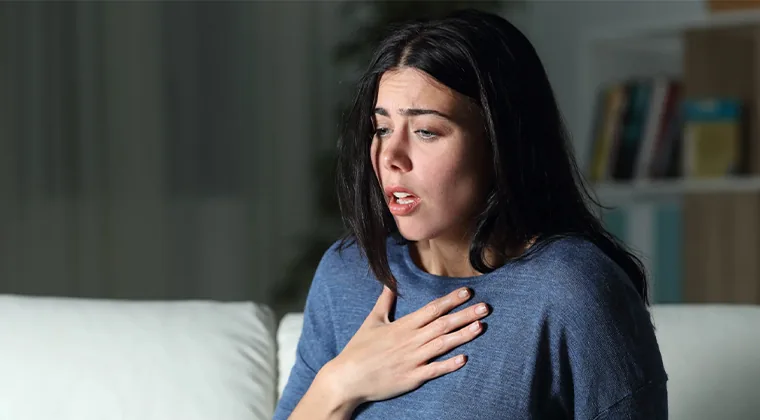
Difficulty breathing, medically known as dyspnea, refers to a subjective feeling of shortness of breath or of “air hunger”. It may feel like heavy breathing, chest tightness, or the sense that you cannot get enough air. This symptom, although common, should never be ignored, since it can indicate a range of underlying conditions, from lung problems to heart problems. The intensity of dyspnea can vary from mild, like what is felt after intense exercise, to severe, even at rest, which requires urgent medical attention.
When to go to the emergency room
Call 911 or go to the emergency room if you have:
- Sudden or severe shortness of breath, or breathlessness that worsens quickly
- Chest pain or tightness
- Lips, face, or nails that look blue or gray
- Not being able to speak in full sentences
- Confusion, drowsiness, or fainting
- Swelling and pain in one leg
Causes
- Lung diseases (asthma, COPD, pneumonia)
- Heart problems (heart failure, arrhythmias)
- Anemia (low red blood cell count)
- Obesity
- Anxiety and panic attacks
- Pulmonary embolism
- Pulmonary fibrosis
- High altitude
Related conditions
- Asthma: bronchospasm and airway inflammation
- Chronic obstructive pulmonary disease (COPD): chronic obstruction of airflow
- Pneumonia: infection and inflammation of the lungs
- Pulmonary fibrosis: scarring and stiffening of lung tissue
- Heart failure: the heart does not pump efficiently
- Anemia: reduced capacity to carry oxygen
- Anxiety: hyperventilation and a feeling of shortness of breath
Management tips
- Stay upright or half-sitting
- Practice slow, deep breathing techniques
- Avoid known triggers
- Maintain a healthy weight
- Exercise gradually, according to your tolerance
- Seek immediate medical attention if it is severe
Complications
- Reduced quality of life
- Limitation of daily activities
- Higher risk of hospitalization
- Acute respiratory failure in severe cases
- Secondary anxiety and depression
- General decline in physical fitness
Frequently asked questions
What tests might I need?
Spirometry, oximetry, and imaging studies. Depending on the case, an exercise test, echocardiogram, or blood tests may also be done.
Which specialist should evaluate me?
A pulmonologist. If the cause turns out to be heart-related or another condition, we coordinate the evaluation with the right specialist.
Sources: ATS (2012)
Symptoms
Do you have this symptom?
If the shortness of breath is mild or has lasted a while, book a consultation at AirCare Salud Respiratoria. If it is sudden or severe, call 911 or go to the emergency room.
Book online on Doctoralia8 symptoms