Tobacco dependence

Reviewed by: Dr. Abraham Misael Tolentino de la Mora · Pulmonology · Sleep medicine · Specialty license 14138092
Last reviewed:
Description
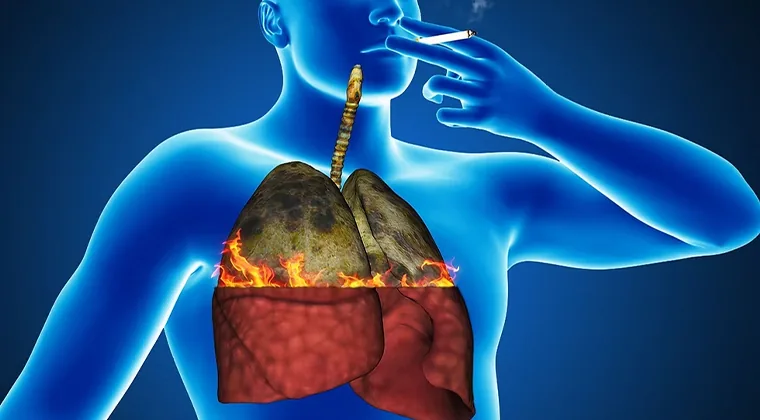
Tobacco dependence is a disease caused by addiction to nicotine, a highly addictive substance found in tobacco products. Beyond the chemical dependence, it is a chronic disease that causes a wide range of harmful effects on almost every organ in the body. Tobacco smoke contains thousands of substances, many of which are toxic and cancer-causing, leading to chronic inflammation and cell damage and seriously compromising lung and cardiovascular function.
Causes
- Nicotine addiction
- Genetic factors
- Psychological factors
- Social and environmental factors
- Influences from family and peers
- Stress and anxiety
- Availability and access to tobacco
Symptoms
- Chronic cough (“smoker’s cough”)
- Difficulty breathing
- Frequent respiratory infections
- Fatigue
- Weight loss
- Bad breath
- Yellow teeth
- Premature skin aging
Diagnosis
During your visit, we measure how much you smoke (smoking index, in pack-years), the degree of nicotine dependence (for example, with the Fagerström questionnaire), and your motivation to quit. In smokers, lung health is also evaluated with spirometry.
Treatment
Combining medication to quit smoking with professional support is the most effective way to succeed. Medications, such as nicotine replacement therapy, are prescribed by your doctor based on your case. Vapes are not an approved treatment for quitting smoking.
Reference guideline: USPSTF, interventions to quit smoking in adults, 2021.
Complications
- Chronic obstructive pulmonary disease (COPD)
- Lung cancer
- Cancer of the mouth, throat, esophagus, and bladder
- Cardiovascular disease (heart attack, stroke)
- High blood pressure
- Asthma
- Chronic bronchitis
- Reduced quality of life
Risk factors
- Early exposure to tobacco
- Social and family influences
- Chronic stress
- Alcohol or other drug use
- Mental health problems
- Low socioeconomic status
- Lack of education about the risks
Statistics in Mexico
According to the Global Adult Tobacco Survey (GATS) 2023, 15.3% of people aged 15 and older smoke in Mexico: 14.3 million people (23.8% of men and 7.3% of women). In addition, 2 million people use e-cigarettes.
Frequently asked questions
Does vaping help you quit smoking?
It is not an approved treatment for quitting smoking. The option supported by evidence is medication prescribed by a doctor, with professional support.
What happens to my body when I quit smoking?
Within a few weeks, circulation and breathing improve. Over the years, the risk of heart attack, COPD, and lung cancer goes down.
How long does treatment last?
The time varies. It is usually a minimum of 12 weeks, with follow-up.
When should I see a pulmonologist?
As soon as you intend to quit smoking, even if you do not yet feel ready, or if you have already tried without success.
Sources: USPSTF (2021) · GATS Mexico (2023)
Conditions
Learn about other conditions
If you want to quit smoking, AirCare Salud Respiratoria can support you with a personalized plan.
Book online on Doctoralia19 conditions