
Bronchiectasis

Reviewed by: Dr. Juan Carlos Acosta Salazar · Pulmonology · Respiratory Physiology and Therapy · Specialty license 14126695
Last reviewed:
Description
Bronchiectasis is a chronic lung disease in which the walls of the bronchi, the airways that carry air in and out of the lungs, are permanently damaged, widened, and thickened. This damage keeps the cilia (small hair-like structures that line the bronchi) from clearing mucus effectively. As a result, phlegm builds up, infections recur, and the risk of progressive lung damage increases.
Causes
- Serious lung infections (pneumonia, tuberculosis)
- Cystic fibrosis
- Immune deficiencies
- Autoimmune diseases (rheumatoid arthritis, Sjögren syndrome)
- Chronic obstructive pulmonary disease (COPD)
- Primary ciliary dyskinesia
Symptoms
- Chronic cough with a large amount of sputum (mucus, often purulent or bloody)
- Recurrent respiratory infections
- Shortness of breath
- Wheezing
- Chest pain
- Fatigue
- Weight loss
Diagnosis
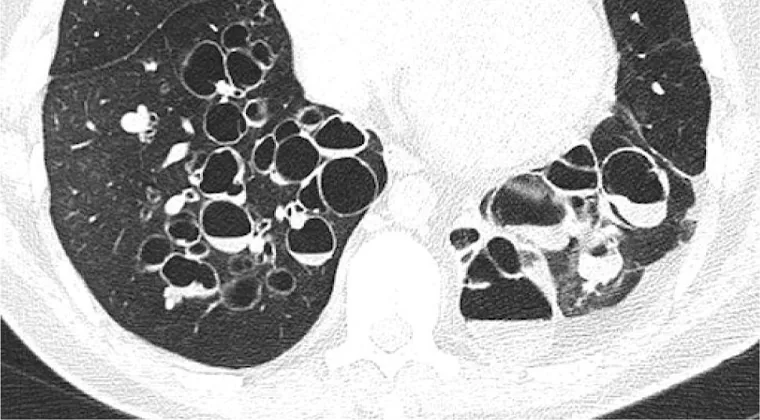
It is confirmed with a high-resolution chest CT scan, which shows the widened bronchi. It is complemented with a sputum culture, spirometry, and tests to look for the cause (for example, immune deficiencies or fungal infections).
Treatment
Daily airway clearance techniques (respiratory physiotherapy) and exercise; treatment of the cause when it is identified; antibiotics during flare-ups and, for people with frequent flare-ups, long-term treatments that your pulmonologist will evaluate; vaccines against influenza and pneumococcus.
Reference guideline: European Respiratory Society, adult bronchiectasis guideline, 2017.
Complications
- Recurrent serious lung infections
- Lung bleeding (hemoptysis)
- Respiratory failure
- Atelectasis (collapse of part of the lung)
- Cor pulmonale
- Lung abscesses
Risk factors
- History of serious lung infections
- Genetic conditions such as cystic fibrosis
- Immune deficiencies
- Severe asthma
- Inflammatory bowel disease
- Severe gastroesophageal reflux
Frequently asked questions
Are they contagious?
No, although some infections that complicate them can be passed to others.
Can they be cured?
Widened bronchi do not return to normal, but treatment reduces infections and symptoms.
When should I see a pulmonologist?
If you have a cough with phlegm almost every day or frequent respiratory infections.
Sources: ERS (2017)
Conditions
Learn about other conditions
If you have a chronic cough with persistent phlegm, book a consultation at AirCare Salud Respiratoria for a specialized evaluation.
Book online on Doctoralia19 conditions