
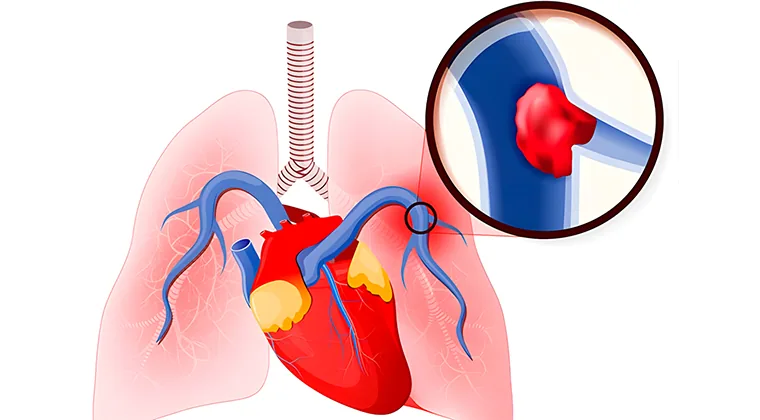
Pulmonary embolism

Reviewed by: Dr. Jesús Ramón Sosa Chombo · Pulmonology · Pulmonary Oncology · Specialty license 14129039
Last reviewed:
Description
Pulmonary embolism is a potentially life-threatening condition that occurs when one or more arteries in the lungs become blocked. Most of the time, this blockage is caused by a blood clot (thrombus) that travels from a leg or, less often, from other parts of the body to the lungs. This interrupts blood flow to part of the lung, which can cause lung damage, low blood oxygen levels and, in severe cases, heart failure and sudden death.
When to go to the emergency room
Call 911 or go to the emergency room if you have:
- Sudden shortness of breath
- Chest pain that worsens when you breathe
- Cough with blood
- Fainting, severe dizziness, or very rapid heartbeat
- Swelling and pain in one leg, especially after surgery, a long trip, or prolonged rest
Causes
- Blood clot that forms in a deep vein (deep vein thrombosis, DVT)
- Clots that travel from the legs to the lungs
- Fat embolism (fractures of long bones)
- Gas embolism (medical procedures)
- Amniotic fluid embolism (during childbirth)
Symptoms
- Sudden difficulty breathing
- Chest pain that worsens when you take a deep breath or cough
- Cough (sometimes with blood)
- Rapid heartbeat
- Dizziness or fainting
- Excessive sweating
- Anxiety
Diagnosis
It requires emergency care. It is diagnosed with a CT angiography of the chest. Probability scales, the D-dimer test and, in some cases, ultrasound of the legs or an echocardiogram are also used.
Treatment
The main treatment is blood thinners (anticoagulants), which keep the clot from growing and prevent new clots from forming. They are continued for at least three months. In severe embolisms, medications that dissolve the clot or other procedures may be needed. Afterward, the pulmonologist follows up to monitor complications such as pulmonary hypertension.
Reference guideline: ESC/ERS, acute pulmonary embolism guideline, 2019.
Complications
- Chronic pulmonary hypertension
- Heart failure
- Risk of recurrent episodes
- Sudden death
- Permanent lung damage
- Cardiogenic shock
Risk factors
- Prolonged immobility (surgery, long trips)
- Cancer
- Heart disease
- Pregnancy
- Hormone therapy
- Oral contraceptives
- Obesity
- Smoking
- Family history of blood clots
- Older age
Frequently asked questions
How long do you need to take blood thinners?
At least three months. Depending on the cause and the risk of it happening again, your doctor may recommend a longer period.
When should I see a pulmonologist?
After a pulmonary embolism, for follow-up of your treatment and to monitor long-term effects such as pulmonary hypertension.
Sources: ESC/ERS (2019)
Conditions
Learn about other conditions
Pulmonary embolism is an emergency. If you have sudden shortness of breath or chest pain, call 911 or go to the emergency room. After your initial care, we at AirCare Salud Respiratoria will follow up with you.
Book online on Doctoralia19 conditions