Thoracentesis

Reviewed by: Dr. Jesús Ramón Sosa Chombo · Pulmonology · Pulmonary Oncology · Specialty license 14129039
Last reviewed:
Procedure to remove fluid or air from the space around the lungs.
Description
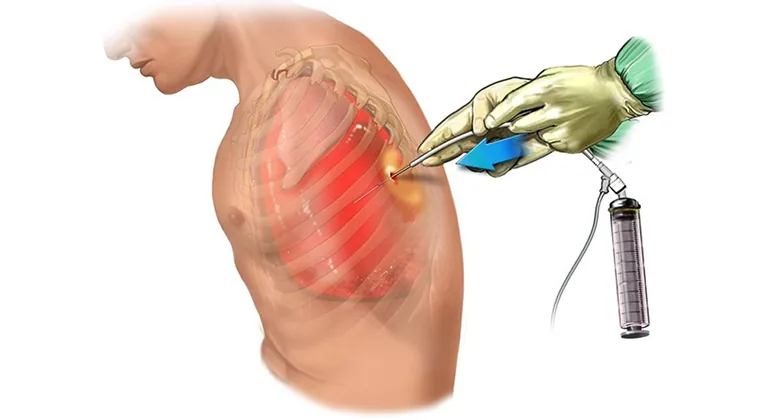
Thoracentesis is a medical procedure in which fluid or air is removed from the pleural space, which is the area between the lung and the chest wall. A thin, sterile needle is inserted through the skin and the muscles of the chest wall into the pleural space. This procedure serves both diagnostic and therapeutic purposes. It is performed under local anesthesia to minimize discomfort and with ultrasound guidance for greater safety and accuracy, which reduces the risk of complications.
Benefits
- Immediate relief from breathing difficulty
- Diagnosis of the cause of a pleural effusion or pneumothorax
- Prevention of respiratory complications
- Better comfort and well-being for the patient
- Valuable diagnostic information from the fluid removed
Is it painful?
Local anesthesia is used, so the patient will feel an initial needle prick and some pressure. It should not be painful once the anesthesia takes effect.
What is it for?
To diagnose infections (pleuritis, empyema), cancer, heart failure, and kidney or liver diseases that cause fluid buildup; and to treat pneumothorax or large pleural effusions.
Myths
- Thoracentesis is very dangerous - False: although it carries risks, when it is performed by an experienced specialist and under ultrasound guidance, it is a safe and effective procedure
Process
- Prior evaluation and patient preparation
- Locating the right site with ultrasound
- Administration of local anesthesia
- Careful insertion of the needle
- Removal of fluid or air
- Post-procedure monitoring
Types
- Diagnostic thoracentesis: to obtain a fluid sample for analysis
- Therapeutic thoracentesis: to relieve symptoms caused by fluid or air buildup
Does it require a hospital stay?
Usually outpatient, although the patient may remain under observation for a few hours
How long does it take?
About 60 to 90 minutes
Does it require anesthesia?
Local anesthesia
How long is the recovery?
The patient may return to light activities the same day. It is recommended to avoid strenuous exertion for 24 to 48 hours
What care do I need afterward?
- Monitoring of symptoms (pain, breathing difficulty)
- Monitoring and care of the puncture site
- Possibly a follow-up chest X-ray
- Report any unusual symptoms right away
- Medical follow-up as directed
Frequently asked questions
Do I need any preparation?
Generally, fasting is not required. Let us know if you take anticoagulants (blood thinners), and take your other medications as usual.
When will I get my results?
Relief from shortness of breath is usually noticed right away. Analysis of the fluid takes 2 to 3 days; cultures and cytology take longer.
Sources: BTS (2023)
Our services
Explore our other services
If you need a thoracentesis to manage fluid or air in your lungs, we offer you our experience at AirCare Salud Respiratoria for your procedure.
Book online on Doctoralia14 services available