Diagnostic and therapeutic bronchoscopy

Reviewed by: Dr. Juan Mariscal Castro · Pulmonology · Interventional Bronchoscopy · Specialty license 14135386
Last reviewed:
Visual examination of the airways and lungs with a flexible tube for diagnosis and treatment.
Description
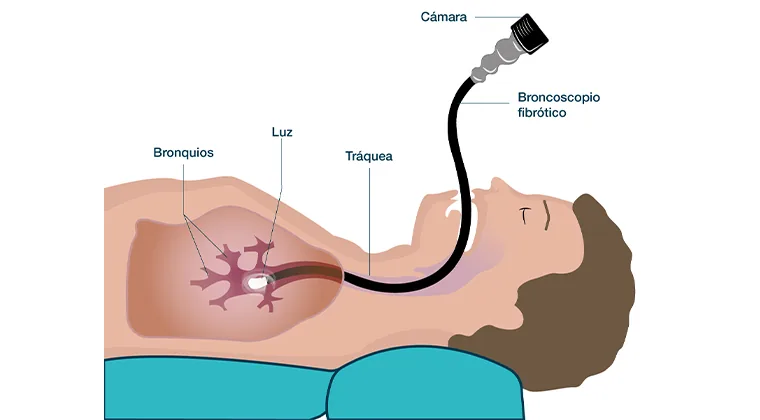
Bronchoscopy is a specialized procedure that allows us to examine the airways and lungs directly. We use a bronchoscope, a thin, flexible tube with a camera at its tip, which is carefully inserted through the nose or mouth until it reaches the bronchi. This procedure not only allows us to see abnormalities, inflammation, or bleeding, but also to take tissue samples (biopsies), suction secretions or foreign objects, and apply treatments directly to the affected area.
Benefits
- Accurate diagnosis of lung conditions
- Tissue sampling (biopsy) for pathology analysis
- Removal of obstructions (mucus, foreign objects)
- Drainage of lung abscesses
- Targeted delivery of treatments
- Direct evaluation of the airways
Is it painful?
It is not painful, since it is performed under general anesthesia.
What is it for?
To diagnose lung cancer, infections, inflammation, and lung bleeding, and to treat airway obstructions or remove foreign objects from the airways.
Myths
- Bronchoscopy is major surgery. False: although it is an invasive procedure, it is considered minimally invasive compared with open surgery
Process
- Patient preparation and fasting beforehand
- Administration of general anesthesia
- Careful insertion of the bronchoscope
- Systematic examination of the airways
- Performance of diagnostic or therapeutic procedures
- Removal of the equipment and post-procedure monitoring
Types
- Diagnostic bronchoscopy: to view the airways and take samples, including endobronchial ultrasound (EBUS)-guided biopsy and cryobiopsy
- Therapeutic bronchoscopy: for specific treatments and removal of obstructions
Does it require a hospital stay?
A brief hospital stay is usually required, although in some cases it may be possible to have the procedure on an outpatient basis
How long does it take?
1 to 2 hours, depending on complexity
Does it require anesthesia?
General
How long is the recovery?
Recovery usually lasts 24 hours after the procedure.
What care do I need afterward?
- Do not eat or drink until your cough reflex has fully returned
- Avoid physical exertion on the day of the procedure
- Follow the specific medical instructions you are given
- Report any unusual symptoms
- Attend your follow-up appointment to review results
Frequently asked questions
Do I need any preparation?
Fast for 6 to 8 hours. Let us know if you take anticoagulants or antiplatelet medicines; your doctor will tell you whether to stop them and for how long. Come with someone and do not drive that day because of the anesthesia.
When will I have my results?
The findings are shared as soon as the procedure ends. Biopsies take 5 to 10 business days; some cultures take several weeks.
Sources: BTS (2013)
Our services
Explore our other services
If your doctor has recommended bronchoscopy, we invite you to book an appointment for your procedure at AirCare Salud Respiratoria.
Book online on Doctoralia14 services available