Lung biopsy

Reviewed by: Dr. Juan Mariscal Castro · Pulmonology · Interventional Bronchoscopy · Specialty license 14135386
Last reviewed:
Removal of a small sample of lung tissue to diagnose diseases, including cancer.
Description
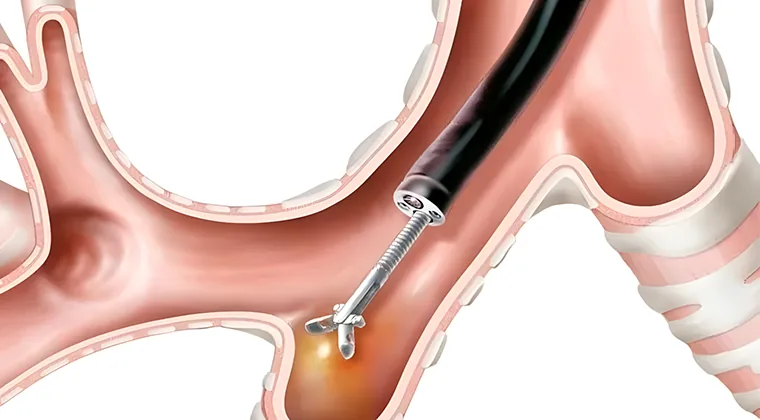
A lung biopsy is a medical procedure in which a small sample of tissue is taken from the lung for microscopic analysis. This study is essential for the definitive diagnosis of various lung diseases, including infections, inflammation, and, crucially, lung cancer. Depending on the location and type of lesion, the biopsy can be performed with different techniques, such as bronchoscopy, percutaneous biopsy (image-guided through the skin), or surgical biopsy.
Benefits
- Definitive diagnosis of lung diseases
- Precise identification of the type of cancer
- Guidance for the most appropriate treatment
- Differentiation of similar lung conditions
- Valuable prognostic information
Is it painful?
It is performed under anesthesia (local or general, depending on the technique), so the patient does not feel pain during the procedure. There may be mild discomfort afterward.
What is it for?
To diagnose lung cancer, interstitial lung diseases (fibrosis), chronic or granulomatous infections, and other conditions that require direct analysis of the tissue.
Myths
- Every lung biopsy means cancer. False: while it is crucial for diagnosing cancer, it is also used to identify many other conditions that are not cancerous.
Process
- Preoperative evaluation and preparation
- Selecting the most appropriate technique
- Administering anesthesia according to the technique
- Careful removal of the tissue sample
- Sending the sample for pathology analysis
- Post-procedure monitoring
Types
- Bronchoscopic biopsy: through the airways
- Cryobiopsy: done by bronchoscopy, with a probe that freezes the tissue to obtain a larger sample
- Percutaneous biopsy: CT-guided through the skin, in coordination with radiology
- Surgical biopsy (VATS): performed through minimally invasive surgery
Does it require a hospital stay?
It depends on the technique. A bronchoscopic or percutaneous biopsy may be outpatient, while a surgical biopsy is usually inpatient.
How long does it take?
It depends on the approach chosen, from 30 minutes to several hours for surgical procedures
Does it require anesthesia?
Always requires anesthesia (local with sedation or general)
How long is the recovery?
From a few hours for a needle biopsy to several days or weeks for a surgical VATS biopsy
What care do I need afterward?
- Rest according to the type of biopsy performed
- Proper pain management
- Monitoring for possible complications (pneumothorax, bleeding)
- Medical follow-up to discuss the results
- Avoid physical exertion as instructed
Frequently asked questions
Do I need any preparation?
Fasting, letting us know if you take anticoagulants (blood thinners), and bringing someone with you, the same as for bronchoscopy. If the biopsy is surgical, you will also need a preoperative evaluation.
When will I get my results?
The pathology report takes 5 to 10 business days. Molecular studies take a few more days.
Sources: ACCP (2013) · BTS (2013)
Our services
Explore our other services
If you need a lung biopsy, book an appointment at AirCare Salud Respiratoria so we can evaluate your case.
Book online on Doctoralia14 services available