Pleurodesis

Reviewed by: Dr. Raúl David Vega Vivar · Thoracic Surgery · Specialty license 14842215
Last reviewed:
A procedure that joins the two layers of the pleura to help keep fluid or air from building up again around the lung.
Description
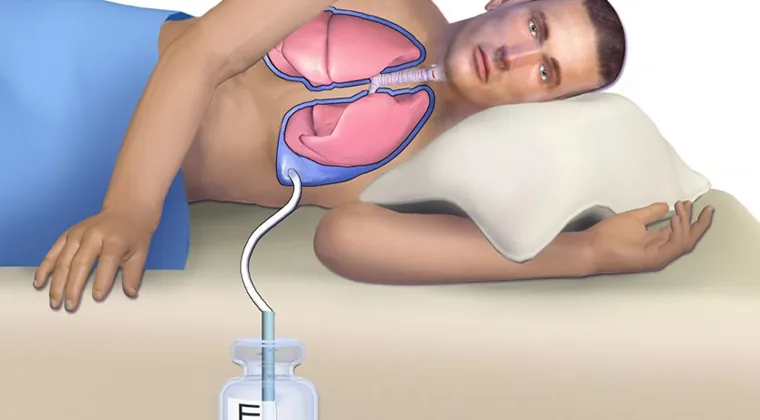
Pleurodesis is a medical procedure performed to prevent fluid (pleural effusion) or air (pneumothorax) from building up again in the pleural space, the area between the lung and the chest wall. It involves placing an irritating substance (a sclerosing agent) into this space. This causes a controlled inflammation that makes the two layers of the pleura stick together: the visceral layer, which covers the lung, and the parietal layer, which lines the inside of the chest wall. The most commonly used agent is talc, which can be applied through a drainage tube or during a thoracoscopy. Once the layers join, the space where fluid or air could collect is eliminated, which helps prevent future episodes.
Benefits
- Prevention of recurrent pleural effusions or pneumothorax
- Relief of chronic breathing difficulty
- Significant improvement in quality of life
- Reduced need for repeated punctures
- Lower chance that the effusion or pneumothorax will return
Is it painful?
It is done under local anesthesia and sedation to minimize pain during the procedure. You may have mild pain or discomfort in the chest afterward, which is managed with pain relievers.
What is it for?
To treat recurrent malignant pleural effusions, persistent or recurrent pneumothorax, and chylothorax (buildup of lymphatic fluid).
Myths
- Pleurodesis is a cure for the underlying disease - False: it is a treatment for a complication (fluid or air buildup), not for the original disease
Process
- Complete preoperative evaluation
- Patient preparation and anesthesia
- Placement of a pleural drainage tube
- Introduction of the sclerosing agent
- Monitoring of the adhesion process
- Removal of the drain when appropriate
Types
- Chemical pleurodesis: with talc or another agent, through a drainage tube or by thoracoscopy
- Mechanical pleurodesis: scraping of the pleura during thoracoscopic surgery (VATS)
- Permanent tunneled pleural catheter: an alternative to pleurodesis when a cancer-related pleural effusion keeps coming back; it allows fluid to be drained periodically
Does it require a hospital stay?
Usually inpatient, since it requires monitoring after the procedure to confirm it is working and to manage any complications
How long does it take?
1 to 2 hours, not counting preparation and observation time
Does it require anesthesia?
Depends on the technique: local anesthesia and sedation if it is done through an endopleural catheter; general anesthesia if it is done through thoracoscopic surgery (VATS)
How long is the recovery?
Initial recovery may take a few days in the hospital. Full recovery may take a few weeks
What care do I need afterward?
- Monitoring of breathing and the puncture site
- Proper pain management
- Avoid strenuous physical activity at first
- Close medical follow-up
- Report any unusual breathing symptoms
Frequently asked questions
What is pleurodesis?
It is a procedure that joins the two layers of the pleura, the layer that covers the lung and the layer that lines the inside of the chest, so that fluid (pleural effusion) or air (pneumothorax) does not build up again. It is done with talc or another agent, through a tube, or during thoracoscopic surgery.
Do I need to prepare for anything?
It requires a hospital stay. Fasting, letting us know if you take blood thinners, and following your doctor's instructions.
When will I get the results?
The result is assessed with follow-up X-rays over the following days and weeks.
Sources: BTS (2023)
Our services

Explore our other services
If you or a family member needs a pleurodesis, we invite you to book a consultation at AirCare Salud Respiratoria to review your options.
Book online on Doctoralia14 services available