Cardiopulmonary exercise test (CPET)

Reviewed by: Dr. Juan Carlos Acosta Salazar · Pulmonology · Respiratory Physiology and Therapy · Specialty license 14126695
Last reviewed:
A diagnostic test that measures how the heart and lungs work during exercise.
Description
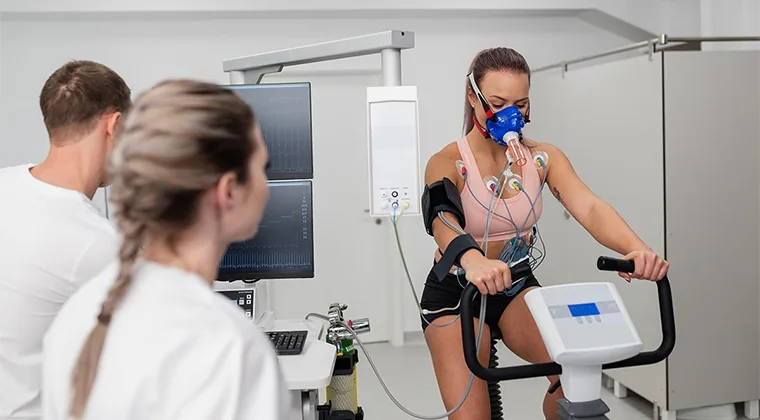
The cardiopulmonary exercise test is a complete diagnostic evaluation, supervised by a physician, that measures how the heart, lungs, and muscles respond during exercise. It involves progressive physical activity, usually on a bicycle or treadmill, while monitoring parameters such as oxygen consumption (VO₂), carbon dioxide production, heart rate, blood pressure, and oxygen saturation. This test helps determine the patient's functional capacity, identify respiratory or cardiovascular limitations, and guide treatment or rehabilitation programs.
Benefits
- Accurate assessment of functional capacity
- Identifying the cause of fatigue or shortness of breath
- Detection of undiagnosed respiratory or heart disease
- Guidance for treatment and rehabilitation decisions
- Monitoring of the response to treatment
Is it painful?
It is not painful. It may cause tiredness or temporary breathing difficulty, which is normal during controlled physical effort.
What is it for?
To assess how the cardiorespiratory system responds to exercise, detect possible limitations or dysfunctions, establish the patient's functional capacity, and determine whether symptoms such as shortness of breath come from the lungs, the heart, or both.
Myths
- This test is only for athletes - False: it is very useful for patients with respiratory or heart symptoms
- It is dangerous - False: complications are very rare. It is performed with continuous monitoring of the heart, blood pressure, and oxygen, and it is stopped if any symptom appears.
Process
- Medical evaluation beforehand and preparation
- Placement of electrodes and monitoring sensors
- Calibration of the gas analysis equipment
- Start of exercise at a progressively increasing intensity
- Continuous monitoring of physiological parameters
- Immediate analysis of results and recommendations
Types
- Progressive exercise test: gradual increase in intensity up to the maximum tolerated
- Submaximal test: limited to a specific percentage of estimated maximum capacity
Does it require a hospital stay?
Outpatient, performed at the cardiovascular physiology center under medical supervision
How long does it take?
1 to 2 hours, including preparation, exercise, and recovery
Does it require anesthesia?
No anesthesia is needed
How long is the recovery?
Recovery is immediate in most cases. The patient can return to normal activities the same day
What care do I need afterward?
- Follow your doctor's instructions based on the results
- If a condition is found, the treatment may need to be adjusted
- Consider referral to rehabilitation if indicated
- Keep up physical activity as recommended by your doctor
Frequently asked questions
Do I need to prepare for anything?
Athletic clothes and shoes. Eat something light 2 to 3 hours before, and avoid smoking and caffeine that day. Bring a list of your medications.
When will I get the results?
The time to receive the report depends on the hospital's timelines. We will let you know on the day of your test.
Sources: ATS/ACCP (2003)
Our services
Explore our other services
If you have fatigue, shortness of breath, or want to know your real physical capacity, ask about the cardiopulmonary exercise test at AirCare Salud Respiratoria.
Book online on Doctoralia14 services available