Sleep studies (respiratory polygraphy and polysomnography)

Reviewed by: Dr. Abraham Misael Tolentino de la Mora · Pulmonology · Sleep medicine · Specialty license 14138092
Last reviewed:
Tests to diagnose sleep-related breathing disorders, such as sleep apnea, by monitoring breathing and other body functions.
Description
Respiratory polygraphy and polysomnography are essential diagnostic tests for identifying sleep-related disorders that affect breathing. Both are valid for diagnosing obstructive sleep apnea (OSA) and other conditions that affect sleep quality and overall health. These studies allow us to objectively evaluate sleep and breathing patterns in order to provide an accurate diagnosis and personalized treatment.
Benefits
- Accurate diagnosis of sleep apnea and other disorders
- Significant improvement in sleep quality
- Reduction in daytime sleepiness
- Prevention of associated cardiovascular complications
- Optimization of personalized treatment
Is it painful?
It is not painful. It involves placing sensors on the body, which may cause some initial discomfort.
What is it for?
To diagnose obstructive sleep apnea, movement disorders during sleep, insomnia, narcolepsy, and other disorders that affect sleep quality.
Myths
- I only snore, it is nothing serious - False: loud snoring can be a sign of sleep apnea, a condition with serious health risks if left untreated
Process
- Initial consultation and symptom assessment
- Selection of the most appropriate type of study
- Patient preparation and instructions
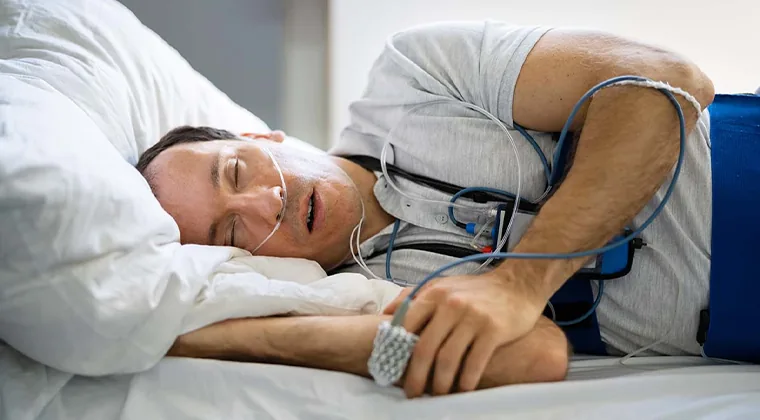
- Placement of monitoring sensors
- Recording one full night of sleep
- Analysis of data and interpretation of results
Types
- Home respiratory polygraphy: Study at home recording airflow, snoring, breathing movements, and oxygen levels
- Polysomnography: Complete study monitoring brain waves, eye movements, muscle activity, heart rhythm, and breathing parameters; at AirCare it is performed in your home
Does it require a hospital stay?
Outpatient. At AirCare, both respiratory polygraphy and polysomnography are performed in your home, using portable equipment.
How long does it take?
Performed during one full night of sleep
Does it require anesthesia?
No anesthesia required
How long is the recovery?
No recovery needed
What care do I need afterward?
- Keep your normal sleep habits before and during the study
- Follow the instructions for placing and removing the equipment
- Attend a follow-up appointment to discuss the results
- Follow the recommended treatment based on the findings
Frequently asked questions
Do I need to prepare for anything?
Follow your usual routine. Avoid naps, and avoid alcohol and caffeine in the afternoon. Take your usual medications unless told otherwise. Keep your hair clean, without any creams, and wear no nail polish.
When will I get my results?
Respiratory polygraphy results are delivered within 48 to 72 business hours after the study, and polysomnography results within 4 to 5 business days after the night of the study.
Sources: AASM (2017)
Our services
Explore our other services
If you suspect a sleep disorder or snore loudly, we suggest booking an appointment for an evaluation and sleep study at AirCare Salud Respiratoria.
Book online on Doctoralia14 services available